FD 27 Direct Your Football Club FD 27 First Season Walkthrough
Twelve months in the office, not twelve formations on a whiteboard.
A first season in FD 27: Direct Your Football Club is a calendar of delayed bills. August looks quiet. February is the invoice. This walkthrough assumes Early Access v0.1: England or Spain, six divisions, three save slots, and an owner who does not pick the eleven. Pair it with the first season checklist if you want boxes instead of prose, and with Getting Started if you have not even chosen a chair.
Pre-season is hiring, not shopping
Do not open the transfer list on day one. Open staff. The staff hire order is medical, then sporting director, then marketing, then finance in a small division. A cheap physio does not sting in the first friendlies. It stings when knocks stack and a full-back is playing nine. How to hire staff covers attributes, salaries, and the youth-coach lock behind the academy building.
Look at facilities next. If the training ground is a shed, that is your first brick, not the museum. The facilities guide and facilities priority exist because comfort buildings flatter the board minutes you owed to Saturday.
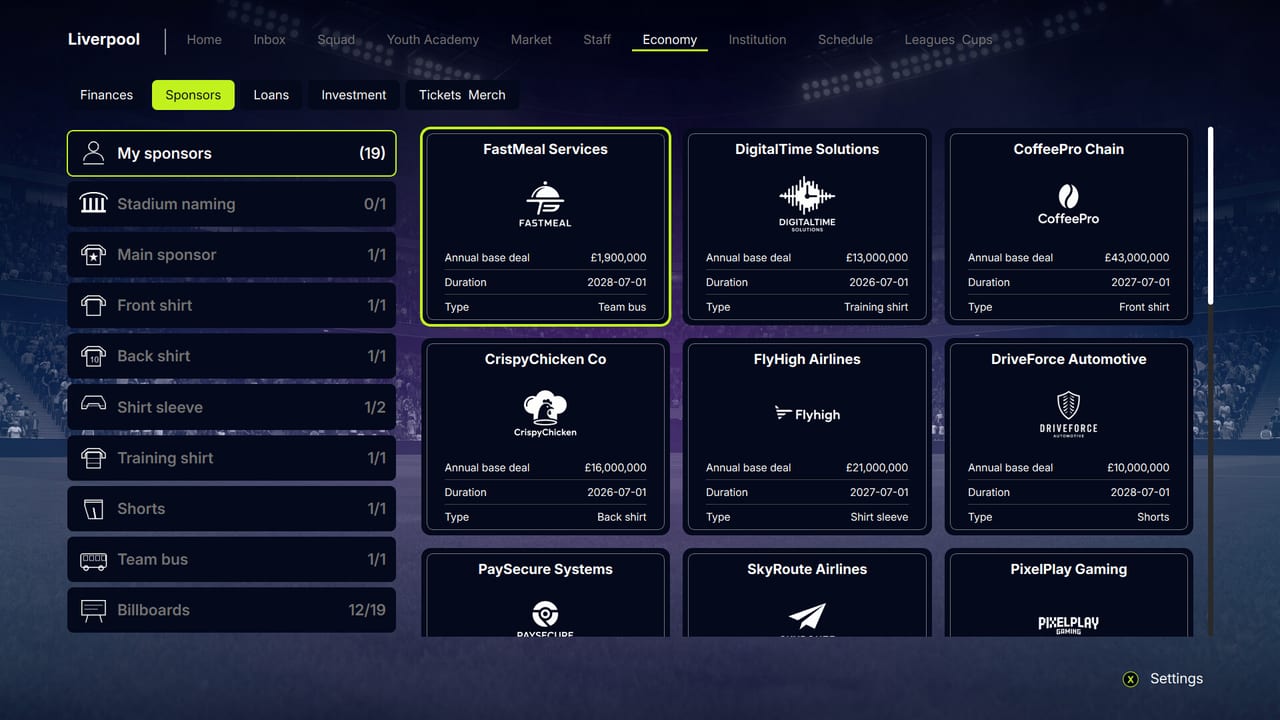
Fill sponsor slots without dumping the shirt. Shirt, sleeve, shorts and stadium are four contracts. The first shirt offer is almost never the club’s real value. How to get sponsors is the negotiation manual. Ticket prices, food and merchandising sit on the same board; weaker divisions had merchandising rebalanced so the shop is not a joke, but it is still not a Premier League fountain.
Set club vision before the first window closes. Playing style, transfer policy, academy commitment and financial profile are not flavour. They are the sentence you will quote in January when a shiny name appears.
August to October: windows and depth
When the window opens, talk, do not raid. Incoming bids now have a full counter-offer screen. Wage resistance is lower than in early demo builds, but a player clearly above your squad average still prices like it. How to negotiate transfers and the transfer market are the two halves of that hour.
Depth beats stardom. Version 0.1 already simulates traumatic injuries and short muscular ones, down to a single day. Three substitution windows will not save you if the bench is a teenager. Read scouting reports instead of overalls; staff lines were expanded into thousands of situational sentences.
Simulate days without guilt. Match speed can be normal, x2 or x4. The engine still counts fatigue and morale. If the side dies after minute seventy-five, that is fitness staff and the training ground, not a missing shout. Match day is the diagnostic.
Winter: the bill arrives
November to February is why medical was S-tier. Fixture density rises. Knocks stop being anecdotes. If you skipped the treatment room, this is the chapter where the table moves without a transfer to blame. Use a monthly save slot before you panic-buy in January. There are three slots: one live, two dated copies. Burn one before a star wage, not after.
Loans exist. A loan that finishes a training ground in League One can be rational. A loan that buys a peak striker follows the wage bill for years. How to manage finances covers television, merchandising, and assembly fines that now forecast in the yearly balance so June is not a jump scare. Relegation auto-cuts wages to the new reality; that is mercy, not a reason to gamble.
English seasons were patched to end on the proper calendar instead of a July leftover. If a date looks wrong after a patch, check patch notes before you rewrite your plan.
Spring: buildings, academy, assembly
Finish the training ground and medical department before you admire the museum. Youth coaches stay invisible until the academy building exists, so hunting that job title in March is wasted clicking. Offices and a scouting centre help later; they do not heal a February infirmary.
Vote in the league assembly with the yearly forecast open. A fine you did not model is a June surprise. Club vision should still match the chair you bought. If you spent winter chasing names that contradict the academy plan, the second year will feel like a new save with extra debt.
What “a good first year” looks like
You do not need a trophy. You need a save where cause and effect stayed visible: the physio you paid, the shirt you did not dump, the training ground you funded, and the star you refused. If you cannot name those four decisions in May, the table taught you nothing even if you stayed up.
Start year two with the same humility. Only then open the roadmap to see when Europe might join the argument. Version 0.1 is already a complete office lesson. Treat it like one.
Frequently Asked Questions
Quick answers for the boardroom questions owners actually search.
Should I sign a star in August?
Only after medical, a shirt deal you can live with, and a bench that survives knocks. Stars without depth are February stories.
When do I build the academy?
After training and medical exist. Youth coaches do not appear until the building is there. See facilities.
Is simulating days cheating?
No. The office is the game. Faster match speeds still roll fatigue, morale and three substitution windows.
What if January feels desperate?
Load a monthly slot before you break vision. Read wages and contracts before you promise a superstar number.